


Flat Roofs vs. Pitched Roofs: What is Best for Your Michigan Home?
Are you feeling overwhelmed by the endless roof‑type choices for your home?
Do you wonder whether a sleek flat roof or a classic pitched roof will stand up to Michigan’s weather?
Is finding a reliable contractor for your roof project adding to the stress?
In this article, we’ll compare flat roofs and pitched roofs, weigh their pros and cons for Michigan’s climate, and help you decide which style best protects your home. You’ll also learn key factors to consider when planning a roof installation in Ann Arbor, so you can move forward with confidence.
Flat Roofs vs. Pitched Roofs: Which Is Best for Your Michigan Home?
Understanding Flat Roofs
Flat roofs are essentially low‑slope roofs (usually 1‑3 inches of pitch) that give a modern, minimalist look. Common materials include built‑up roofing (BUR), modified bitumen, EPDM rubber, and TPO membranes.
Pros for Michigan
Easier access for maintenance and for installing solar panels.
Provides usable rooftop space for decks or gardens when properly waterproofed.
Cons to watch for
Snow and ice can accumulate; a well‑designed drainage system and, in some cases, a heated membrane are essential.
Ponding water may develop if the slope isn’t sufficient, requiring regular inspections.
Understanding Pitched Roofs
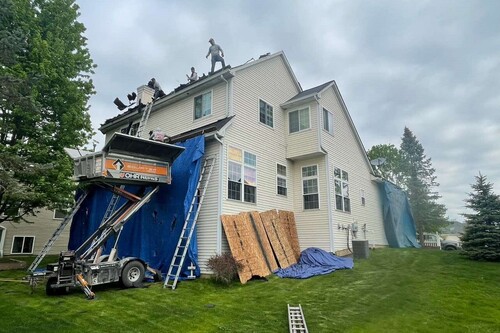
Pitched roofs have a noticeable slope, ranging from modest (4:12) to steep (12:12), and are the traditional silhouette on most Michigan homes. Typical materials are asphalt shingles, wood shakes, metal panels, and slate.
Pros for Michigan
The slope naturally sheds snow and rain, reducing the risk of water damage.
Attic space created by the pitch allows for extra insulation, which can boost energy efficiency.
Cons to consider
Higher material and labor costs because of the more complex framing.
Less usable rooftop area for solar panels or outdoor spaces.
Climate Considerations in Michigan
Michigan averages 30–40 inches of snowfall annually, and Ann Arbor sees roughly 45 inches. A pitched roof’s slope gives it a clear advantage in shedding snow quickly, while a flat roof must rely on drainage and possibly heated systems to prevent ice dams. Both roof types need robust insulation and ventilation to survive freeze‑thaw cycles, but the attic cavity in a pitched roof often provides a natural buffer against temperature swings.
Cost and Maintenance in Plain Language
Flat roofs tend to have lower upfront material costs but may require specialized crews for membrane installation. Their maintenance revolves around checking for ponding water, membrane cracks, and ensuring the drainage system stays clear. With proper care, a well‑installed membrane can last 20–30 years.
Pitched roofs usually involve higher labor expenses because of framing and multiple layers of underlayment. Maintenance is generally straightforward—inspect shingles for damage, keep valleys sealed, and clear debris from gutters. Depending on the material (asphalt, metal, slate), a pitched roof can last anywhere from 25 years to several decades.
Energy Efficiency and Sustainability
Flat roofs are ideal for solar arrays because they sit level, allowing panels to capture maximum sunlight without the need for additional mounting hardware. Membranes like EPDM and TPO also reflect heat, which can reduce cooling loads in summer.
Pitched roofs, especially when topped with reflective metal shingles, can also lower cooling costs while providing natural attic ventilation that helps retain heat in winter. The extra attic space can be insulated to improve overall home energy performance.
Decision Guide – What’s Right for Your Ann Arbor Home?
If you love a modern aesthetic and plan to use the roof for solar panels or a rooftop garden, a flat roof can work well—provided you invest in proper drainage and insulation.
If you prioritize snow handling and want the traditional look that most neighborhoods expect, a pitched roof is usually the safer choice.
Budget‑conscious homeowners may find the lower material cost of flat roofs appealing, but they should factor in the potential for more frequent inspections.
If you need attic space for storage, insulation, or future upgrades, a pitched roof gives you that extra volume.
Upgrade Your Home with a New Roof Installation in Ann Arbor
Your perfect roof awaits – let us help!
If you’re ready to start a roof installation project in Ann Arbor, our experienced team is here to guide you from design to completion. Contact us today at (734) 662-3300 or
Request a free on‑site estimate through our website. Let’s ensure your Michigan home stays safe, beautiful, and energy‑efficient for years to come.